
Sciatica is nerve-related pain that travels from the lower back into the buttock and down the leg, often with tingling, numbness, or weakness along the sciatic nerve pathway. Most cases improve with conservative care that reduces inflammation, restores mobility, and addresses the root cause, with surgery reserved for persistent or severe cases or red-flag symptoms such as progressive weakness or loss of bowel or bladder control.
What Is Sciatica?
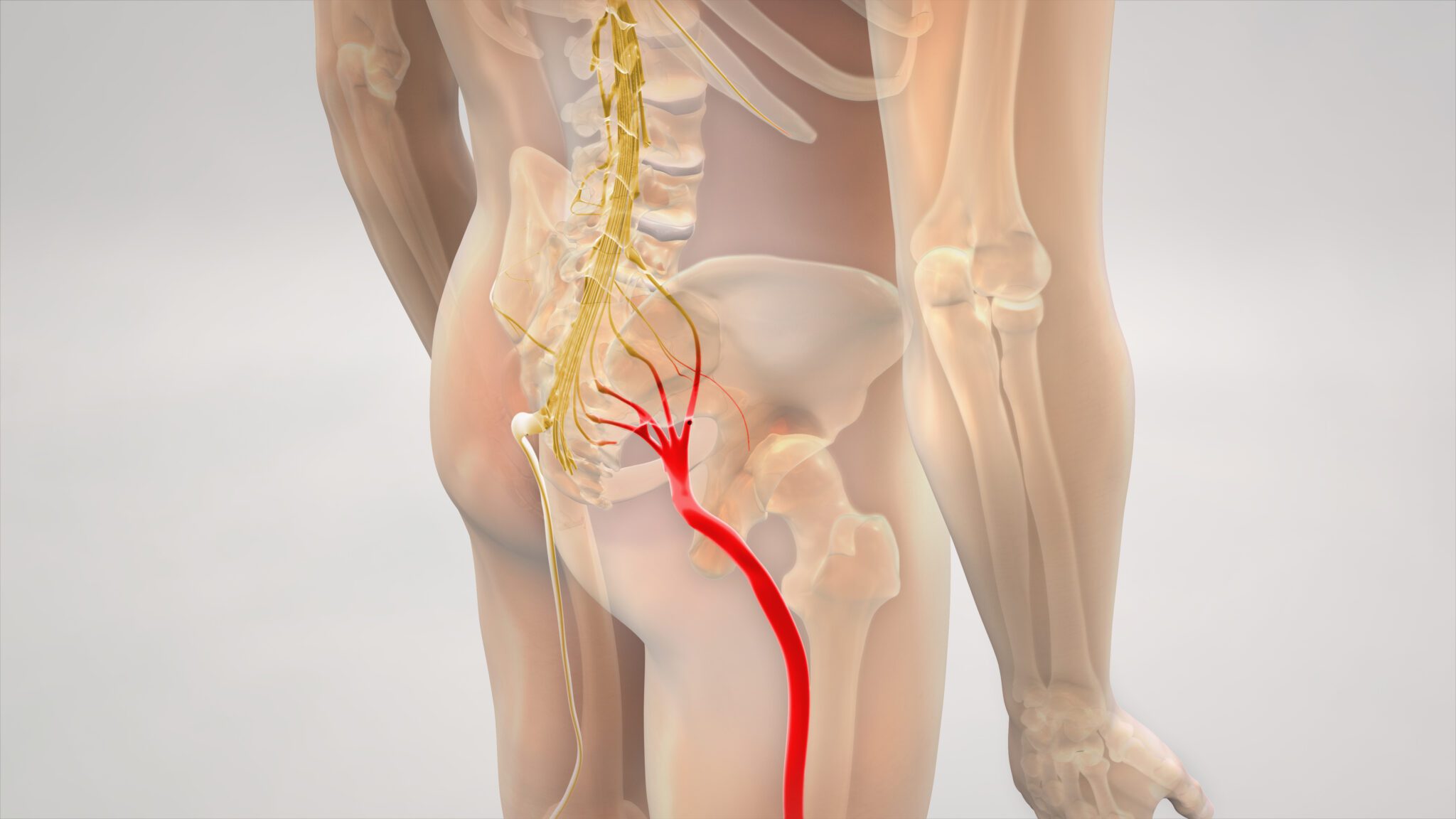
Sciatica is not a diagnosis on its own but a pattern of symptoms caused by irritation or compression of the sciatic nerve or its roots in the lower spine. People typically describe sharp, burning, or shooting pain from the low back through the buttock and down the back of the thigh or calf, sometimes reaching the foot. Numbness, pins-and-needles, or weakness can occur in the same distribution, and symptoms may worsen with prolonged sitting, bending, twisting, or coughing.
Common Causes
The most frequent causes include lumbar disk herniation or bulge, age-related spinal changes such as stenosis or bone spurs, and spondylolisthesis, where one vertebra shifts relative to another. Soft-tissue factors, like piriformis muscle spasm, hip/gluteal tightness, or movement control deficits, can also irritate the nerve. Less commonly, traumatic injury or systemic conditions contribute. A thorough assessment helps distinguish nerve-root compression from muscular referral and identifies aggravating postures and loads.
Assessment Approach
An initial evaluation focuses on health history, symptom behavior, and functional limits, followed by movement testing, neurological screening for strength and sensation, and orthopedic tests to pinpoint the pain generator. When indicated, imaging such as MRI or referral to a medical provider is coordinated, particularly if red flags are present or symptoms fail to improve with appropriate conservative care.
Conservative Treatment Options
Care prioritizes calming irritated tissues while restoring mobility and resilience. Targeted education explains pain drivers and activity modifications that reduce nerve stress, such as avoiding prolonged end‑range flexion or static sitting. Guided exercise progresses from gentle nerve mobility, hip and lumbar stabilization, and directional preference movements to strength and endurance for the core, hips, and legs. Hands-on techniques; such as joint mobilization, soft‑tissue release, and myofascial work which can reduce guarding and improve motion when paired with active rehab.

Multidisciplinary Care at Back to Health
Back to Health Wellness Centre integrates physiotherapy, chiropractic care, massage therapy, Active Release Techniques, and custom orthotics within a single plan so sciatica is treated from multiple angles. Physiotherapists design individualized programs of mobility, stabilization, and graded loading to reduce nerve sensitivity and improve function. Chiropractors can provide spinal mobilization or manipulation when appropriate, helping restore segmental motion and reduce mechanical irritation. Massage therapists address muscular tension, trigger points, and protective guarding in the lumbar, gluteal, and piriformis regions that can perpetuate sciatic symptoms. Where gait mechanics or foot posture contribute to loading issues up the chain, orthotic assessment can support more efficient, comfortable movement.
Adjunctive Modalities
Depending on presentation and tolerance, adjuncts such as interferential current therapy and cupping or myofascial decompression may be used to modulate pain, improve local circulation, and ease soft‑tissue restrictions, always in service of returning to active rehabilitation. Heat or cold may be recommended for short-term symptom relief, combined with pacing strategies that maintain movement without flaring symptoms.
When Injections or Surgery Are Considered
Most people improve without invasive procedures, but corticosteroid injections can be considered for persistent nerve‑root inflammation that limits progress in rehab. Surgical consultation is appropriate for severe or progressive neurological deficits, intractable pain despite comprehensive conservative care, or red flags such as bowel or bladder changes. The Back to Health team can coordinate timely referrals and continue pre‑ and post‑procedure rehabilitation to optimize outcomes.
What Recovery Looks Like
Recovery typically unfolds over weeks as pain settles and capacity increases. Early goals include reducing pain and restoring comfortable walking and sitting tolerance, followed by reclaiming bending, lifting, and rotation with better control. Later stages emphasize strengthening and endurance, return to sport or work demands, and relapse‑prevention strategies. Clear home programs and education on posture, lifting mechanics, and activity breaks are essential to maintain gains.
Getting Started at Back to Health
Care begins with a comprehensive assessment to identify the drivers of pain and functional barriers. A personalized plan will outline short‑term relief strategies, stepwise exercise progressions, hands‑on care as needed, and pacing for daily activities. The multidisciplinary team collaborates so each session moves toward specific goals—less pain, more movement, and a confident return to the activities that matter.
If sciatica is limiting daily life, book an assessment with Back to Health Wellness Centre in Ottawa to create a tailored, integrated plan that addresses the cause, relieves symptoms, and builds long‑term resilience.
