
Welcome menu
Services menu
About us menu
booking menu
Links menu
 
where the athletes go

240 Catherine Street, Suite 100, Ottawa.

Tel: 237-3306

line

If you have any comments on this site, please send us some feedback.

Valid HTML 4.01!

Site design: Rencomms
logo
title
nav bar


Back to Prevention page

Running form

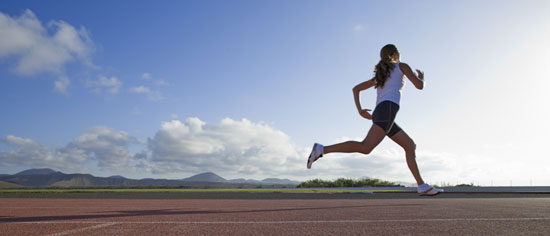
running man

Running form

The ideal running posture is such that a plum line could be dropped from the ear lobe down through the shoulders and through the hips to the ground.
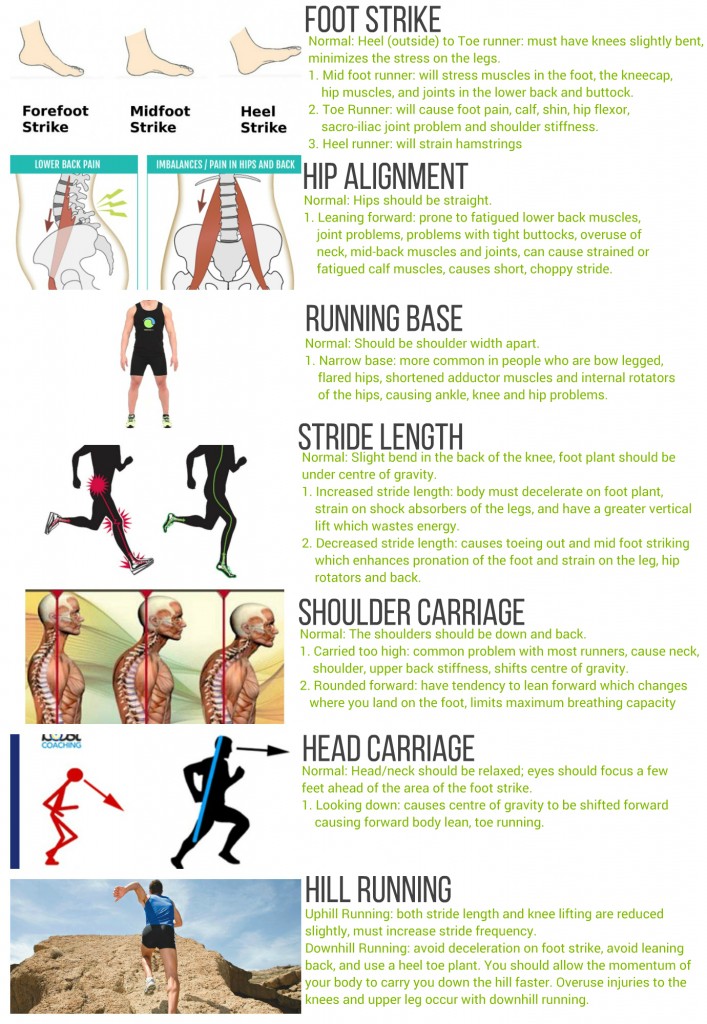
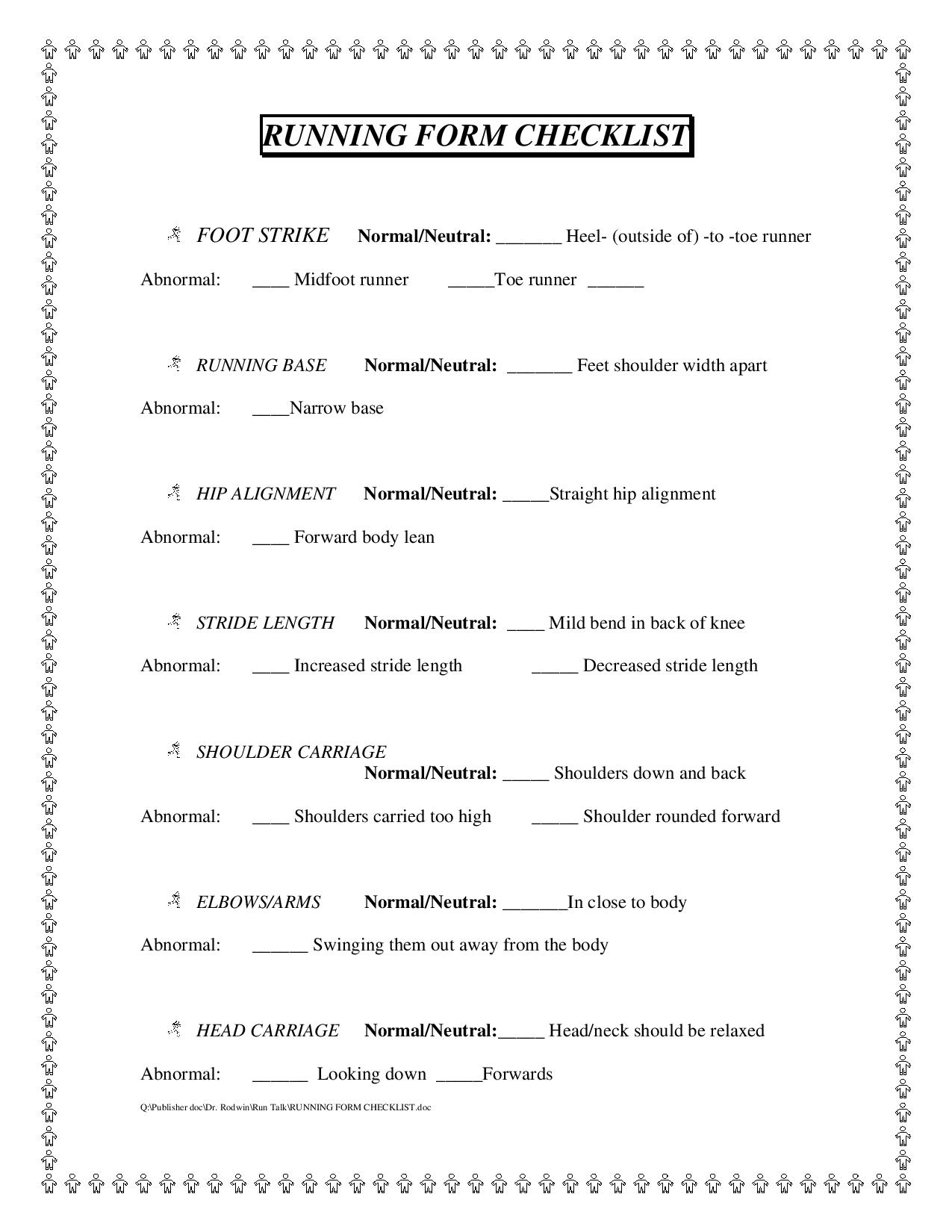
Foot strike

1. Heel Toe runner - must have knees slightly bent - correct running form will minimize the stress on the legs.

2. Midfoot runner - will stress muscles in the foot, the kneecap, hip muscles, and joints in the lower back and buttock.

3. Toe Runner - will cause foot pain, calf, shin, hip flexor, sacro-iliac joint problem and shoulder stiffness.

Hip alignment

1. Leaning forward - prone to fatigued lower back muscles, joint problems, problems with tight buttocks, overuse of neck, midback muscles and joints, can cause strained or fatigued calf muscles, causes short, choppy stride.

Running base

1. Wider Stance - causes feet to toe out, less shock absorption, shorter choppier strides, pronate more.

2. Cross over on foot plant - sway from side to side, more common in people who are bow legged, flared hips, shortened adductor muscles and internal rotators of the hips, causing ankle, knee and hip problems.

Stride length

Foot plant should be under centre of gravity.

1. Increased stride length - body must decelerate on foot plant, strain on shock absorbers of the legs, have a greater vertical lift which wastes energy.

2. Decreased stride length - have a wider running base, causes toeing out which enhances pronation of the foot and strain on the leg, hip rotators and back.

3. Overstride on one side only - occurs normally with a short leg (can be anatomical or structural) and also from muscle imbalances in the leg and hip flexors.  This causes you to externally rotate that leg, outside part of that foot always touches first, stresses shin, knee, and torsion's upper body, causes muscle fatigue in shoulder girdle muscles.

Arm carriage

Movement should occur through the elbows not the shoulders.

1. Carried too high - common problem with most runners, cause neck, shoulder, upper back stiffness, shifts centre of gravity and have tendency to lean forward, limits maximum breathing capacity.

Head carriage

Head should be relaxed, eyes should focus a few feet ahead of the area of the footstrike.

1. Head Bobs - due to exaggerated stride length.

2. Looking down - causes centre of gravity to be shifted forward causing forward body lean, toe running.

Hill running

Uphill Running - both stride length and knee lift are reduced, must increase stride frequency.

Downhill Running - avoid deceleration on foot strike, avoid leaning back, using a heel toe plant, and carrying the arms up and out at the sides. You should lean a bit forward landing on the midfoot and drive the arms like you are sprinting.

- overuse injuries to the knees and upper leg occur with downhill running.


Would you like Dr Rodwin to check out your running form? Email her for an individual or group analysis.

line

home news bookings contact us links
